
ASEAN doesn’t have an AI innovation problem
Posted on July 17, 2025
Share This Article




𝗜𝘁 𝗵𝗮𝘀 𝗮𝗻 𝗔𝗜 𝗮𝗱𝗼𝗽𝘁𝗶𝗼𝗻 𝗽𝗿𝗼𝗯𝗹𝗲𝗺.
A partner from New Zealand recently pointed me to something interesting.
Their government is piloting a program that co-funds up to $15,000 for SMEs to work with certified advisors and implement AI in practical ways.
Not research.
Not experimentation.
𝗔𝗱𝗼𝗽𝘁𝗶𝗼𝗻.
Source: https://lnkd.in/gkB4qnP4?
Because the biggest economic opportunity in AI isn’t large enterprises.
𝗜𝘁’𝘀 𝗦𝗠𝗘𝘀.
Across ASEAN, SMEs represent 90–99% of all businesses and contribute 40–60% of GDP.
Yet most SMEs are drowning in operational work:
• manual reporting
• invoice reconciliation
• compliance documentation
• copy paste routines across spreadsheets
This is where AI creates its largest economic multiplier.
Not through futuristic breakthroughs.
Through 𝗥𝗲𝘁𝘂𝗿𝗻 𝗼𝗻 𝗧𝗶𝗺𝗲 (𝗥𝗢𝗧).
If AI removes 20 hours of operational work per week, the productivity expansion compounds quickly.
𝗜𝗳 𝗷𝘂𝘀𝘁 𝟱% 𝗼𝗳 𝗔𝗦𝗘𝗔𝗡 𝗦𝗠𝗘𝘀 𝗮𝗱𝗼𝗽𝘁 𝗽𝗿𝗼𝗱𝘂𝗰𝘁𝗶𝘃𝗶𝘁𝘆 𝗔𝗜,
𝘁𝗵𝗲 𝗿𝗲𝗴𝗶𝗼𝗻 𝗰𝗼𝘂𝗹𝗱 𝘂𝗻𝗹𝗼𝗰𝗸 ~$46𝗕 𝗶𝗻 𝗻𝗲𝘄 𝗲𝗰𝗼𝗻𝗼𝗺𝗶𝗰 𝗰𝗮𝗽𝗮𝗰𝗶𝘁𝘆 𝗲𝗮𝗰𝗵 𝘆𝗲𝗮𝗿.
And this assumes only 20 hours of weekly time recovery.
Many real deployments save even more.
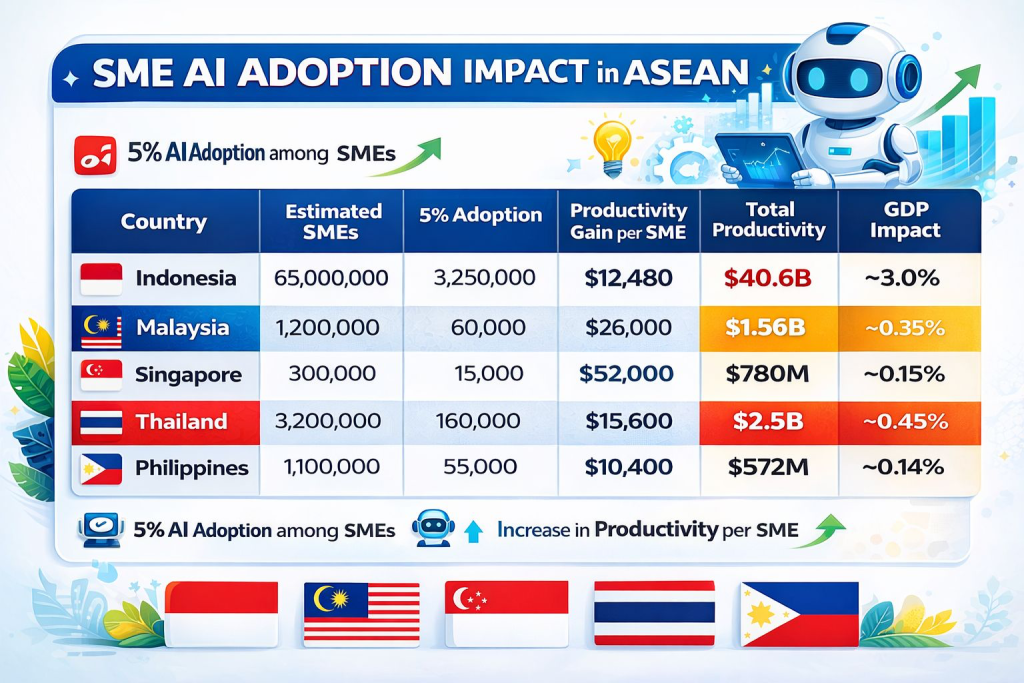
𝗪𝗵𝗮𝘁 𝗚𝗼𝘃𝗲𝗿𝗻𝗺𝗲𝗻𝘁𝘀 𝗦𝗵𝗼𝘂𝗹𝗱 𝗔𝗰𝘁𝘂𝗮𝗹𝗹𝘆 𝗗𝗼
If policymakers want to accelerate AI adoption, three practical steps matter:
1️⃣ 𝗔𝗜 𝗔𝗱𝗼𝗽𝘁𝗶𝗼𝗻 𝗚𝗿𝗮𝗻𝘁𝘀
Small incentives like New Zealand’s $15K AI advisory funding reduce the risk for SMEs to start.
2️⃣ 𝗧𝗮𝘅 𝗥𝗲𝗯𝗮𝘁𝗲𝘀 𝗳𝗼𝗿 𝗣𝗿𝗼𝗱𝘂𝗰𝘁𝗶𝘃𝗶𝘁𝘆 𝗔𝗜
Treat AI deployment the same way governments treat R&D investments.
3️⃣ 𝗔 𝗥𝗢𝗧 𝗖𝗵𝗲𝗰𝗸𝗹𝗶𝘀𝘁 𝗳𝗼𝗿 𝗦𝗠𝗘𝘀
Fund projects that automate:
• reporting & dashboards
• invoice processing
• procurement reconciliation
• payroll preparation
• compliance documentation
These are not AI experiments.
They are economic capacity multipliers.
𝗧𝗵𝗲 𝗥𝗲𝗮𝗹 𝗤𝘂𝗲𝘀𝘁𝗶𝗼𝗻 𝗳𝗼𝗿 𝗔𝗦𝗘𝗔𝗡 𝗙𝗶𝗻𝗮𝗻𝗰𝗲 𝗠𝗶𝗻𝗶𝘀𝘁𝗲𝗿𝘀
Should AI policy focus primarily on regulation and frameworks?
Or on unlocking SME productivity at scale?
Because when SMEs reclaim time…
they reclaim capacity.
And when millions of SMEs gain capacity simultaneously,
entire economies accelerate.
All calculations are approximations based on publically available data.
by: Vivek Thomas

Check out These Related Blog Posts


