Most Teams Drown in Spaghetti Processes
Walk into any large company and you’ll see the same thing: a once-simple workflow turned into a tangled mess.

𝗠𝗼𝘀𝘁 𝗧𝗲𝗮𝗺𝘀 𝗗𝗿𝗼𝘄𝗻 𝗶𝗻 𝗦𝗽𝗮𝗴𝗵𝗲𝘁𝘁𝗶 𝗣𝗿𝗼𝗰𝗲𝘀𝘀𝗲𝘀. 𝗔𝗜 𝗧𝘂𝗿𝗻𝘀 𝗜𝘁 𝗜𝗻𝘁𝗼 𝗮 𝗣𝗶𝗽𝗲𝗹𝗶𝗻𝗲.
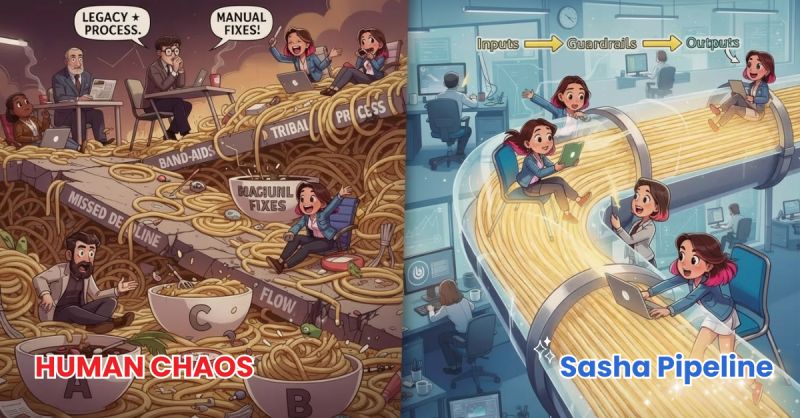
Walk into any large company and you’ll see the same thing: a once-simple workflow turned into a tangled mess. Layers of band-aids. Tribal knowledge trapped in people who eventually leave. Everyone reaching the same finish line… but starting from completely different places.
Take reporting. One “final” report stitched together from seven sub-reports. Every employee has their own sequence. A, then C, then E, then B. Interruptions reset the flow. Deadlines slip. Quality swings. It’s not incompetence, 𝗶𝘁’𝘀 𝘀𝗽𝗮𝗴𝗵𝗲𝘁𝘁𝗶𝗳𝗶𝗰𝗮𝘁𝗶𝗼𝗻.
And here’s the uncomfortable truth:
𝗬𝗼𝘂 𝗰𝗮𝗻’𝘁 𝗳𝗶𝘅 𝘁𝗵𝗶𝘀 𝘄𝗶𝘁𝗵 𝗮 𝗳𝗲𝘄 𝗖𝗵𝗮𝘁𝗚𝗣𝗧 𝗽𝗿𝗼𝗺𝗽𝘁𝘀 𝗼𝗿 𝗮 𝗱𝗿𝗮𝗴-𝗮𝗻𝗱-𝗱𝗿𝗼𝗽 𝗮𝘂𝘁𝗼𝗺𝗮𝘁𝗶𝗼𝗻 𝘁𝗼𝗼𝗹.
Yes, you could try. But in reality, the flows break under exceptions, humans override rules, and chaos returns within a week.
AI workflows fix this because they enforce a single, efficient path.
You define inputs, outputs, and guardrails.
The AI executes the steps: fast, consistent, and interruption-proof.
Typical time reclaimed: 𝗳𝗿𝗼𝗺 𝟰 𝗱𝗮𝘆𝘀 𝘁𝗼 𝟱 𝗺𝗶𝗻𝘂𝘁𝗲𝘀, on repetitive operational tasks (ranges, not promises).
You de-spaghettify the process.
Your team gets hours back.
OPEX comes down because your people stop doing low-leverage work nobody enjoys.
If you’ve got one process that’s choking your team, start there. I’ll help you map it and test it in 30 days.
Leads AISensum's content strategy, social footprint, and partnerships, using research and storytelling to translate the "Human in the Lead" framework into campaigns that make AI teammates real to enterprise audiences.