
Seadanya Is Not a Strategy
In competitive markets, a 0.1% loss triggers action. In protected ones, even 10% feels “normal.”

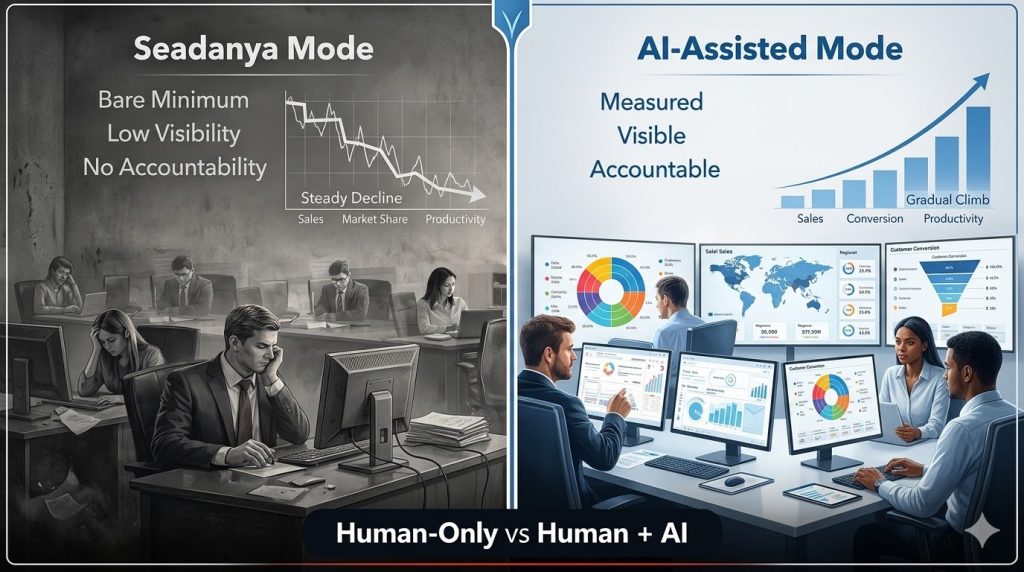
I recently heard a word that stayed with me:
“Seadanya.”
Do what’s available.
Do just enough.
It sounds harmless.
𝗜𝘁 𝗶𝘀𝗻’𝘁.
In business, seadanya becomes:
• Acceptable mediocrity
• Low urgency
• Weak ownership
• Minimal accountability
And here’s the uncomfortable truth:
𝗦𝗲𝗮𝗱𝗮𝗻𝘆𝗮 𝘀𝘂𝗿𝘃𝗶𝘃𝗲𝘀 𝘄𝗵𝗲𝗻 𝗹𝗲𝗮𝗱𝗲𝗿𝘀𝗵𝗶𝗽 𝘁𝗼𝗹𝗲𝗿𝗮𝘁𝗲𝘀 𝗶𝘁.
In highly competitive markets, losing 0.1% market share triggers action.
In protected environments, losing 10% can still feel “normal.”
That’s not a talent problem.
𝗜𝘁’𝘀 𝗮 𝘀𝘁𝗮𝗻𝗱𝗮𝗿𝗱𝘀 𝗽𝗿𝗼𝗯𝗹𝗲𝗺.
Now here’s where AI changes the equation.
AI doesn’t just automate work.
𝗜𝘁 𝗺𝗮𝗸𝗲𝘀 𝗽𝗲𝗿𝗳𝗼𝗿𝗺𝗮𝗻𝗰𝗲 𝘃𝗶𝘀𝗶𝗯𝗹𝗲.
Response times.
Upsell rates.
Error percentages.
Productivity gaps.
We’ve seen AI coaching move upsell compliance from 70% to 85%.
That’s not motivation.
𝗧𝗵𝗮𝘁’𝘀 𝗺𝗲𝗮𝘀𝘂𝗿𝗲𝗱 𝗯𝗲𝗵𝗮𝘃𝗶𝗼𝘂𝗿 𝗰𝗵𝗮𝗻𝗴𝗲.
And here’s the part leaders should think about:
A young doctor with AI can outperform an average one without it.
A frontline cashier with AI coaching can outsell a complacent veteran.
A lean team with AI can beat a bloated one.
𝗔𝗜 𝗶𝘀 𝗮 𝗹𝗲𝘃𝗲𝗹𝗹𝗲𝗿.
When performance becomes transparent,
seadanya becomes obvious.
The real question for CEOs isn’t:
“Should we adopt AI?”
It’s:
𝗪𝗵𝗮𝘁 𝗹𝗲𝘃𝗲𝗹 𝗼𝗳 𝗽𝗲𝗿𝗳𝗼𝗿𝗺𝗮𝗻𝗰𝗲 𝗮𝗿𝗲 𝘄𝗲 𝘄𝗶𝗹𝗹𝗶𝗻𝗴 𝘁𝗼 𝘁𝗼𝗹𝗲𝗿𝗮𝘁𝗲?
Because seadanya is not cultural.
𝗜𝘁’𝘀 𝗰𝗼𝗻𝗱𝗶𝘁𝗶𝗼𝗻𝗮𝗹.
And conditions are set at the top.
By: Vivek Thomas
25 years in market research and AI in Jakarta. Choosing empowerment over replacement by building AI teammates that keep your people firmly in the lead.